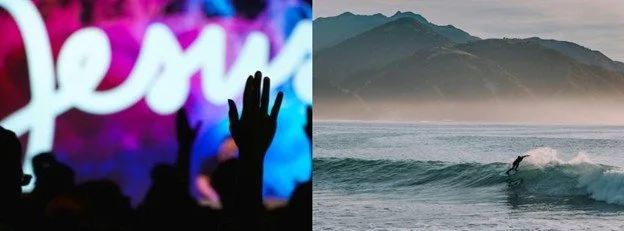
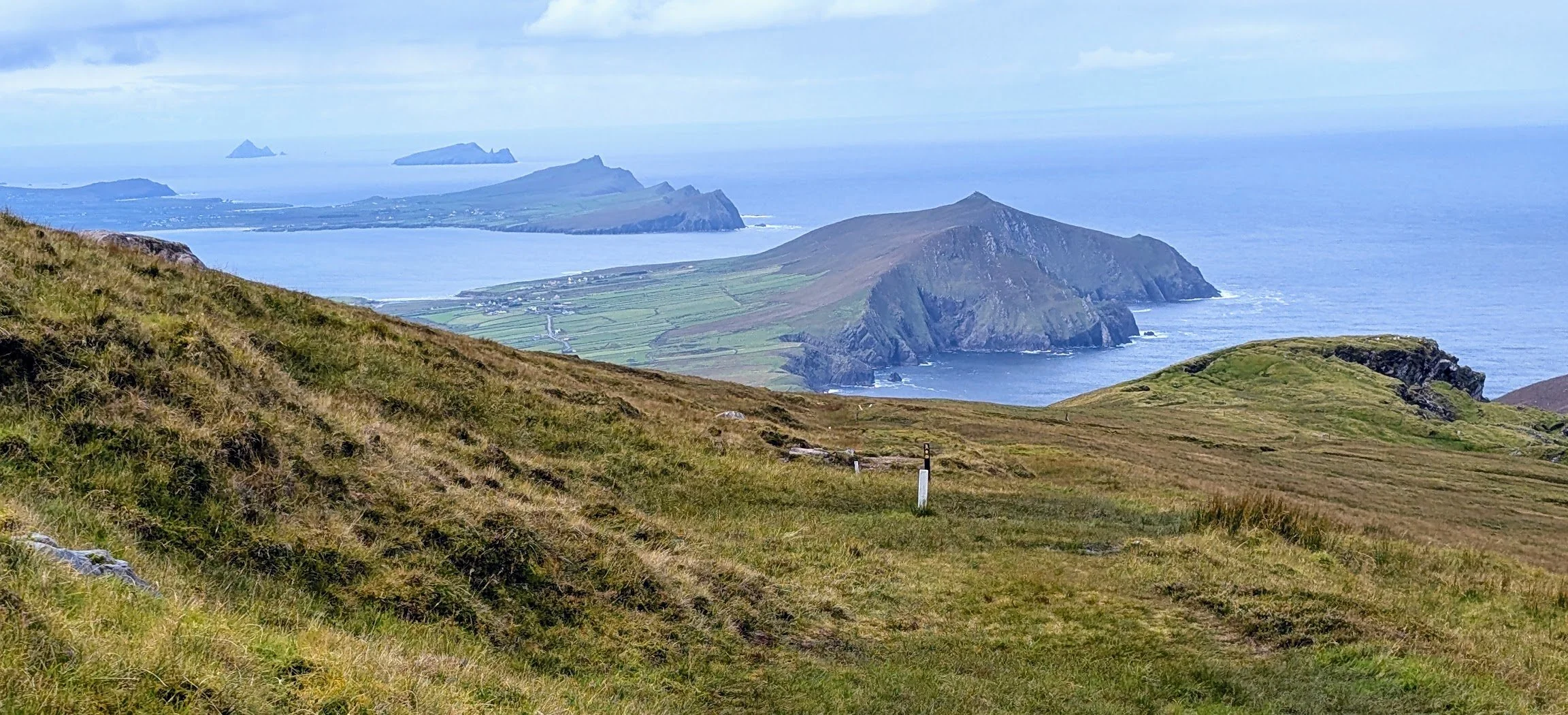
I've been thinking about heaven these days. More precisely, I've been thinking about the new heaven and the new earth, the time when all things will be made new. In regard to scripture's description of this age, it's difficult to know what is literal and what is metaphorical. For example, Isaiah writes “the wolf will lay with the lamb” and there will be “no killing on my holy mountain” (Isaiah 11:9) while at the same time we will eat “choice meats on the mountain of the Lord.” (Isaiah 25:6). The images in Revelation are even more mysterious. Yet, amid the uncertainty, I have a theory; not a doctrine, just a theory. I suspect that in the age to come we will be, quite literally, surrounding the throne of the Almighty in rapturous worship and simultaneously engaging in normal earthly life – planting gardens, walking with friends and surfing big waves in wild oceans.
From Where Does Our Giving Come?
“Where do you believe what we give to others comes from?” I asked.
“From a place of self-emptying or from fullness?”
And why is this helpful to distinguish? Because on the face of it, what’s easy for any of us to believe is that when pouring yourself out for— or into— someone else, relationally or otherwise, you as the giver must or will become less. Drained or diminished in some way. That to serve or support or listen or absorb is to shrink or reduce or lop off a piece of oneself.
Sacred Silence
This week I attended my first Quaker worship service. I welcomed the invitation of an hour of communal silence. The world has grown so noisy and even finding my place in traditional “Christian churches” has left me crestfallen and longing for more of Jesus.
As I found my way to the meeting, held at a local community center, I saw the simple circle of sixteen chairs. I noticed the established name tags. I found the familiar “Hello My Name Is” sticky and wrote my name with a big black Sharpie. I looked around the room and found a seat next to a woman who was friendly and made light conversation.
The Times Call For Mystics
By the time February rolls around I am usually hanging onto life by my fingernails. This self-diagnosed Seasonal Affective Disorder girlie struggles to survive the Big Dark in the Pacific Northwest each year and this winter is no different. Perhaps it is worse: my dad passed away in November and gestures wildly at the world all this is happening too. There aren’t enough candles in all of Home Goods to hygge my way through the dark, the grief, and the nightly news.
What’s a baby contemplative to do? What else can I add to my life beyond my arsenal of mental health and spiritual life professionals, pharmaceuticals, and copious mind-numbing doses of reality television?
Welcome Change
As the youngest of five, I have always felt entitled to the perpetual "fountain of youth"--even though the calendar turns every year. That illusion morphed into pixelated fragments in a single moment last year. “You have cataracts,” the doctor said. My brain exploded. I knew my prescription was out of date but, this is the language of old people I thought!
No Boots, Barefoot
It was time for me to move from my quiet morning time into the rest of my day. I didn’t want to; but there were things to do, and it was time. I noticed myself trying to muster up the energy to move. Normally I would do just that - use my will to summon up the energy to get about my day. As I lingered in my chair the phrase, “pull yourself up by your bootstraps” came to mind.
After being in God’s gentle presence, hearing “pull yourself up by your bootstraps,” just didn’t fit. I knew this advice was coming from me, not from God. But I wasn’t sure how to move forward. It wasn’t a normal day; I needed more energy than usual. In fact, the last few weeks have been anything but normal. I would describe this time as liminal. Life has taken an unexpected turn and the fragility of life has been vulnerably exposed. Things aren’t normal. And now this? Pulling myself up by my bootstraps didn’t feel like it would work, and really, I didn’t even want it to.
Make Space
Last week I was listening to a friend read an excerpt from a Richard Rohr book. As her words washed over me, a few landed in a soft place in my heart. Pondering, rearranging, playing with those words ended in a happy result; a short, but meaningful poem.
I am grateful to have the chance to share it with you.
“Make Space”
Make space
Open and inviting
For
The whole human experience
Growing Up
In my growing up years I was afraid of my dad. He had an explosive anger, and I was, at times the recipient of that anger, especially in my teenage years. My dad never hit me, never spanked me, but, as I said, I was, at times, the recipient of his anger, and for that reason I was afraid of him.
My dad never, ever darkened the doors of a church, except for funerals or weddings, but my mom was a quiet and a very strong Christian and I followed her to church. I have always felt that I was loved by Jesus.
Sacred Flame
On Sunday mornings I get to tell the children’s story. I grew up in the church and know so many of these stories forwards and backwards; but now I get to revisit them with grace and wonder. I am invited to translate my dawning awareness into language that invites the children to wonder; invites them to learn about a God who welcomes them, who welcomes us, right where we are at.
One week the sermon centered Rizpah (2 Samuel 21). It is not a story I learned in Sunday School. It's not exactly kid fare, but I wondered what it might be like to tell a story and model how to use big feelings instead of suppressing them. What might shift in a child’s heart, in my heart, if big feelings were personified as characters? What might open up if feelings were held as sacred messengers?
Who Is Weaving My Identity?
Expectations. They are woven into the fabric of my identity, like a background operating system that runs silently under the surface and yet can have a profound impact. This is something God’s been inviting me to explore lately.
I have expectations of myself. I think that’s a good thing. It’s good to have goals, standards, hopes, and dreams. However, sometimes my response when these expectations aren’t met is not a good thing. When I get disappointed with myself, my compassion towards me is diminished. My inner critic grows. Sound familiar?